

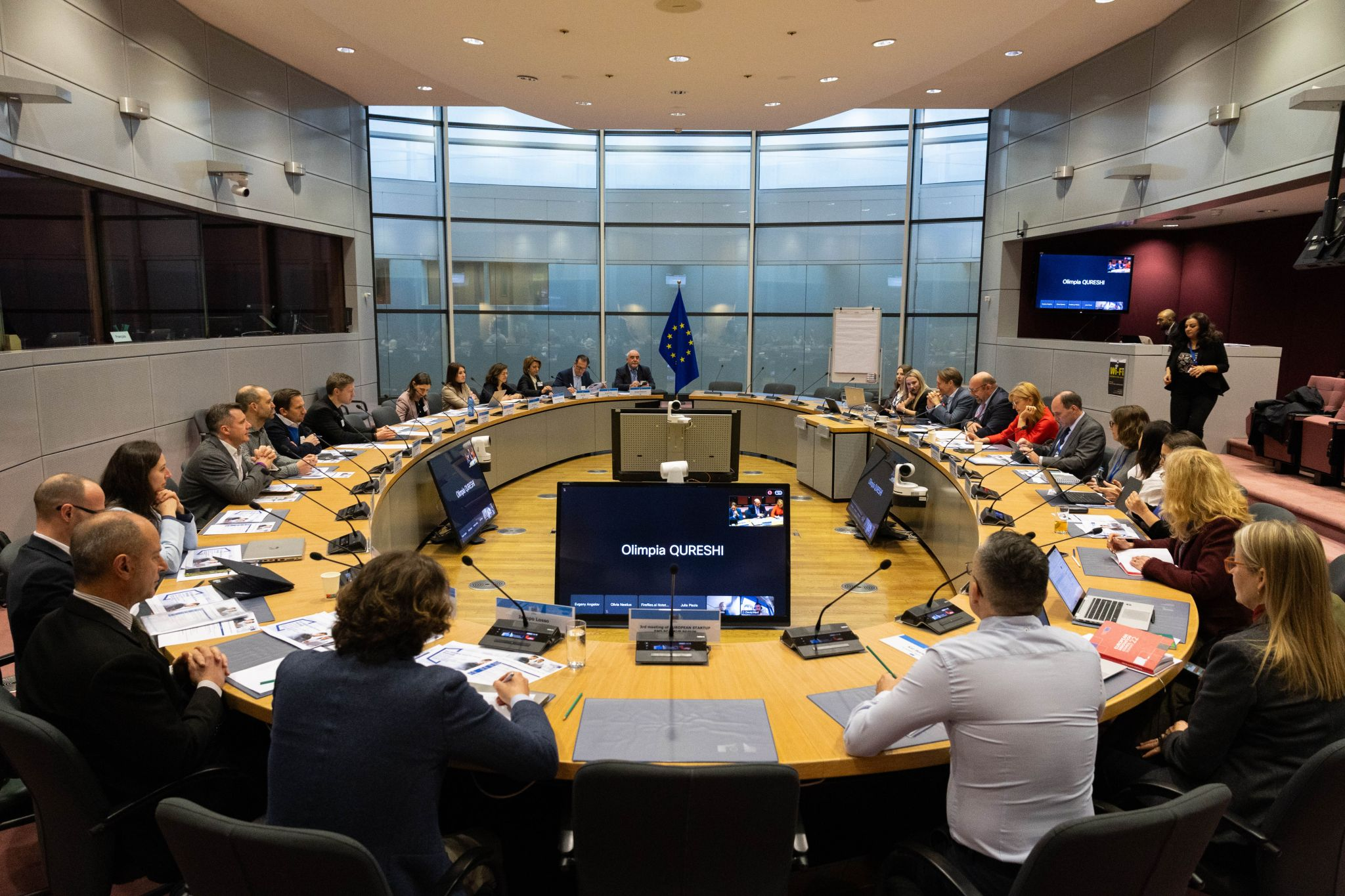

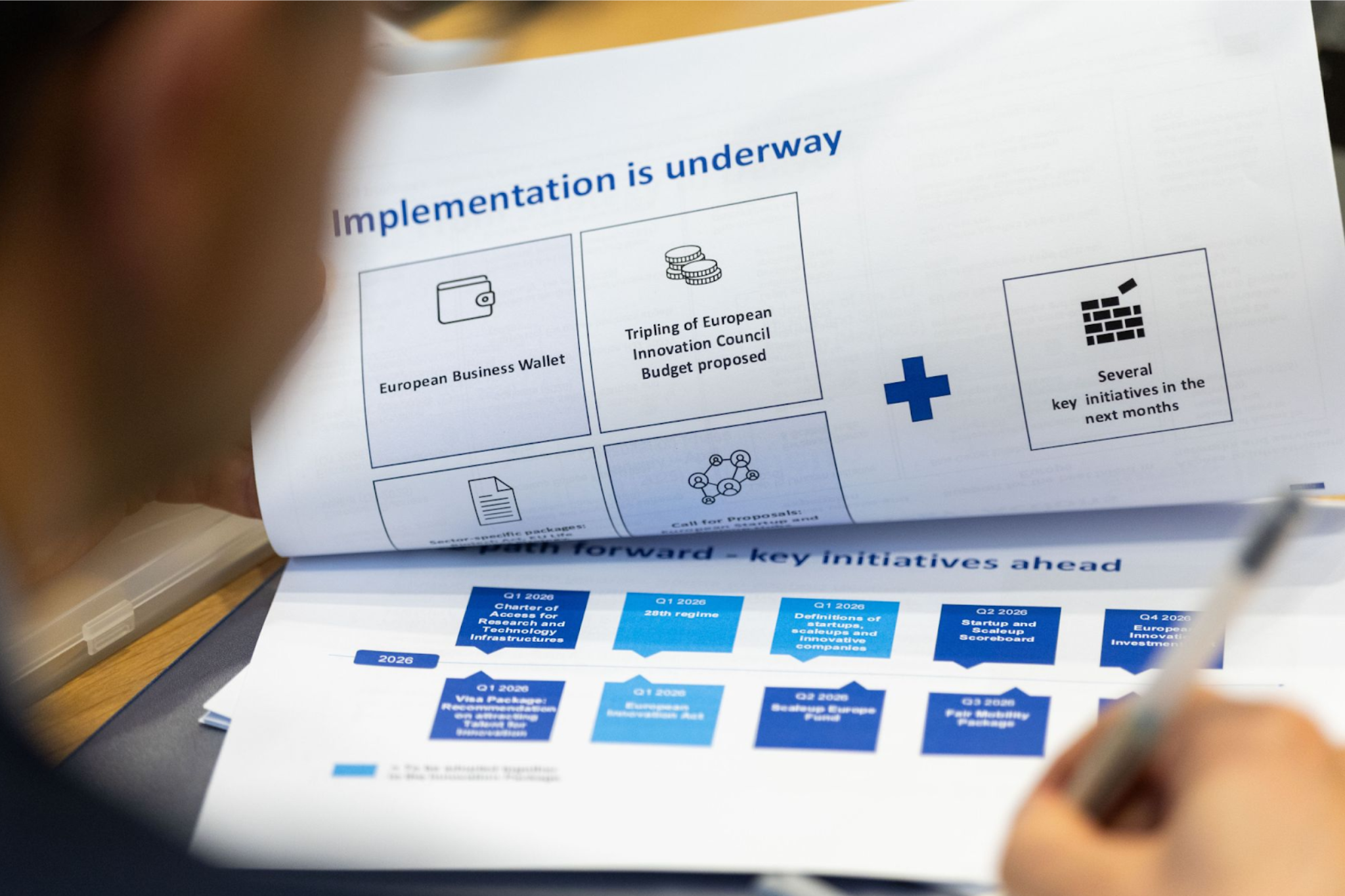
The taskforce presented updates on several flagship initiatives, including the “28th regime”, the European Innovation Act, the Scaleup Europe Fund, and other measures under development within the scope of the Startup Scalup Strategy. Together, these initiatives aim to achieve a long-standing objective: the creation of a true European Single Market for capital and innovation.
EBAN was represented at the meeting by our Director General, Jacopo Losso, reaffirming our commitment to contributing constructively to the implementation of the strategy and to ensuring that Europe becomes the place to start and scale a company.
A Single Market for Innovation: Faster Than Expected
Since consultations began in Spring 2025, the strategy has advanced rapidly. Concrete legislative and financial instruments are now taking shape, signalling unprecedented momentum at EU level. The European Commission expressed strong confidence in this process, underlining its determination not to miss what it sees as a historic opportunity to remove fragmentation and unlock Europe’s full entrepreneurial potential.
A key milestone will take place on 18 March, when the 28th regime is expected to be voted on at Commission level as part of a broader series of initiatives that includes the European Innovation Act. The proposal will then enter negotiations with the European Parliament and the Council. Importantly, the Commission is working towards adopting these measures as EU regulations rather than directives, in order to avoid slow national transposition and further market fragmentation.
The 28th regime is designed to offer startups a truly European legal framework, including a fast and low-cost digital company registry granting “EU INC” status, harmonised rules on stock options, and greater alignment of insolvency frameworks across Member States. EBAN has long been a strong advocate of this approach, notably through its 2025 European Angel Investment Summit (EAIS) in Brussels, where Commissioner Zaharieva was invited to discuss the 28th regime with the ecosystem, as well as through its 2025 policy paper Recommendations for EU and National Policy Makers, which outlined concrete proposals to advance the framework.
Complementing this, the European Innovation Act will address structural barriers to scale by improving access to markets and public procurement, strengthening framework conditions, supporting the commercialisation of research, and facilitating access to research and technology infrastructure. Its all-inclusive objective is to boost EU industrial competitiveness and place innovation and research at the heart of Europe’s economic model, to enable innovative companies to launch and grow within the EU.
Financial support will also be strengthened through the new European Scaleup Fund, launched in late 2025 and expected to be fully operational by summer 2026. The fund will invest on a deal-by-deal basis in European growth-stage startups alongside private investors, with a particular focus on Series B and later rounds in deep-tech and science-driven ventures, where funding remains scarce in Europe. Managed by a private fund manager on behalf of the EU and other major limited partners, including national development banks and institutional investors, the fund aims to keep high-potential companies growing and succeeding in Europe, with exits primarily driven by mergers and acquisitions with European corporates.
Stronger Support for Business Angels
Business angels will also play a more prominent role in the strategy. From 2026, targeted support for angel investors is planned, and EBAN is currently in discussions with Commissioner Zaharieva’s team on an ambitious pan-European co-investment scheme that would invest alongside qualified angels and angel syndicates. Further meetings with the Commission are scheduled for February, with more details to follow.
The forum concluded with a clear call to action: national startup and investment associations are encouraged to actively engage with their governments to advocate for the 28th regime and the broader harmonisation efforts. These reforms, the Commission stressed, are not only beneficial for founders but also for investors and for Europe’s long-term competitiveness.